

Posted on 4 Comments

How to Cook Roast Beef

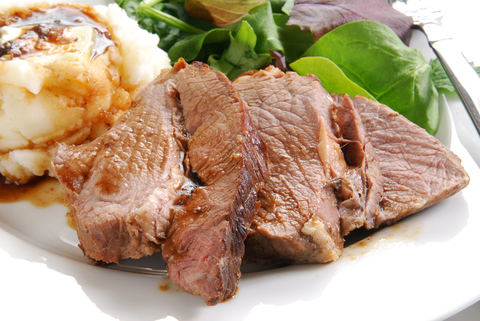
Roast BeefWhen it comes to late Autumn and the cold weather starts to bite, lots of us start to move to comfort food to keep our kids warm on cold days and put some good solid food into their bellies.

Making roast beef and then later adding all the trimmings is something that we can all do easily and make as healthy or as unhealthy as we want it to be.

Even adding something as simple as a Yorkshire Pudding can make it a dish that everyone would love to sit down to.

Getting roast beef cooked properly is actually easier than most people think it is.

Once it’s cooked, it can be used for a full meal, with salad, mashed, roast or boiled potatoes, or even sliced and added to sandwiches for a fabulous packed lunch.

Choose a Good Cut of Beef

I’d personally choose a rib of beef or a fillet to roast, but there are other options.

  • Beef should look mature and have been well hung.
  • There should be some fat to allow for flavour and to keep the roast moist while it’s cooking.  It can be cut off before it is served up.
  • There should be some marbling through the roast to help keep the roast moist.

Cooking Times

I’d recommend going by the times of your cooker as they can change, or be different from cooker to cooker.  As a general rule of thumb, a very hot oven around 220C to start off with for the first 30 minutes in a pre-heated oven.

Lower the temperature of the oven for the rest of the cooking time to about 190 – 200C.

I check my meat by using a thermometer and put it right into the thickest part of the meat.

Options are approximately:

  • Rare –  (130-140F) The middle of the meat is a bright red hue and pinky towards the outside.
  • Medium – (145-150F).   The outside of the meat will be brown  with a pinky centre and the roast will be hot.
  • Well Done –  (160-175F) As we prefer our meat well done here, I am usually looking for my roast to be brown throughout.

These cooking times and heats are a guide for example only.  Guide temperatures can change depending on who is cooking and the roast you have picked.  Make sure you follow manufacturers and suppliers instructions to make sure your meat is safely stored, cooked and eaten.

How to Cook Roast Beef

  • Rest your beef for an hour before cooking it.
  • It should be roasted in a tin big enough to catch any juice drip that might happen.  Completely encase the roast in tin foil and loosely close it.
  • Once the meat is cooked, it again needs to rest.   Use the aluminium foil and make a loose parcel shape over the top and leave the roast to rest for about 15-20 minutes to get the most out of the meat.
  • Pour off any excess juice for making gravy and your roast is ready to carve and serve with your accompaniments.


Posted on 9 Comments

Drinking When Pregnant: Woman refused a glass of wine by barman.

Wine AlcoholDefying my ability to understand human nature, I am in the court of the poor barman who has probably been hauled over the coals for taking a stand and refusing to serve an obviously pregnant woman with a glass of wine.

It also defies my belief that a heavily pregnant woman would want to go drinking when pregnant and have a glass of wine in the first place.  Yes it’s her choice, but for goodness sake, what about the baby in her belly.  Do women really not realise that alcohol passes through to the foetus unfiltered?

I know that one glass of wine gets me tipsy nowadays so I really do have to wonder just how tipsy it would make a bubba growing slowly in a belly.

I live with a child suffering the effects of someone else’s drinking as a pregnant woman and I feel nothing but disgust for anyone who isn’t an alcoholic choosing to drink while they are pregnant.  I can understand alcoholics as they’re driven by cravings and need, with an illness that is as hard to break as any drug or food obsession, but I can’t understand why someone would want to drink alcohol when they can choose not to.

So, the short version is that someone past their due date popped into a bar for a glass of wine and got refused.  And the barman was slated for it.

If someone really had done extensive research on the effects of drinking alcohol while pregnant, I’d find it hard to believe that they’d then choose to have one, but each to their own.   They do have to realise though, that other people have their own code of moral conduct and there are other people who just cannot stomach seeing that happen.

The Telegraph quoted

“The barman came up to me and said he wouldn’t serve me because he couldn’t have serving a pregnant woman alcohol on his conscience.”

The woman states:

“I felt like asking whether he refuses to serve fat people pies, or whether the bar checks how much caffeine a woman has consumed that day before they serve her a cup of coffee.”

Well, the fat person eating pies, or the woman drinking caffeine who isn’t pregnant – aren’t taking risks with anyone else’s life but their own.

The Telegraph also stated:

“The NHS advises that pregnant women should drink no more than 1 to 2 units of alcohol, the equivalent of a small glass of wine, once or twice a week to minimise the risk to their unborn child.”

Ding, ding, ding.   Disappointing for the Telegraph.

The NHS actually states.

The UK Chief Medical Officers’ advice to women is:

‘Women who are pregnant or trying to conceive should avoid alcohol altogether.  However, if they do choose to drink, to minimise the risk to the baby, we recommend they should not drink more than 1-2 units once or twice a week and should not get drunk.’

It also states:

“If women want to avoid all possible alcohol-related risks, they should not drink alcohol during pregnancy because the evidence on this is limited.”

The NHS goes even further to say:

How does alcohol affect my unborn baby?

If you drink alcohol when you’re pregnant, the alcohol crosses the placenta into the bloodstream of the unborn baby and could interfere with how it grows and develops. In the absence of its own blood filtering system, the foetus is unprotected from any alcohol molecules that cross from the mother’s blood.

Alcohol can cause damage to an unborn baby at all stages of pregnancy. Drinking during pregnancy has been associated with:

miscarriage (over 9,000 women are admitted to hospital every year for miscarriages caused by alcohol [NHS Information Centre Hospital Admission data])
low birth weight
heart defects
learning and behavioural disorders

Yes, it’s a womans right to make her own choices, after all, it’s not illegal.

It’s a pity the baby doesn’t have any rights whatsoever until it’s born.

Would the same women who want to glug a glass of wine in pregnancy fill a feeding bottle with wine and have their babies chug down a glass of wine?

You won’t find any foster or adoptive parent who cares for a child affected by the mothers drinking in the womb approving ANY alcohol whatsoever.

Three cheers for that barman.  He is my hero of the year.

Posted on 8 Comments

Are Artificial Food Colourings REALLY Bad?

Food Colouring

Looking at the ingredients labels on bottles tins and cans when my kids were little would have me literally scream inside and look around carefully for the bad mother halo replacement to be plonked on my head if I chose to feed them something with horrific artificial content.

I’d plonk the offending food items back on the shelves and carry on sanctimoniously with my shopping.

Food additives seemed almost impossible to avoid unless we made everything from scratch.

All of my boys suffer from ADHD along with the other things they live with daily.  I’d spent a lot of time and effort researching what is good and what isn’t for them, and still I got it wrong.

Giving the boys a Fruit Shoot would have them bouncing off the walls and heading for the roof.

At one time, Haribos being fed to my boys would see me looking for the nearest bolt hole to sit out the impending devastation that someone else’s mother has wreaked on my home in the aftermath of their feeding my kids things I’d asked them not to.

I really didn’t give a monkeys about sugar.  A sugar rush was NOTHING in comparison to some of the effects of other foods their bodies seemed to send them begging on their hands and knees for.

Additives have to be assessed for safety before they can be used in our food and drink, but that doesn’t necessarily mean that they’re all ok for every person.   Due to EU laws, all food must be labelled clearly in the ingredients section, but here too, I found it difficult to tell the difference when there are several terms that can be used for the same thing.

I quickly learned that there were ingredients to avoid, and others that didn’t matter too much.

The Food Standards Agency has also said that consumption of mixes of some artificial colourings with the preservative called sodium benzoate could also lead to an increase in hyperactivity in some children.

The artificial colours they identified were:

  • sunset yellow FCF (E110)
  • quinoline yellow (E104)
  • carmoisine (E122)
  • allura red (E129)
  • tartrazine (E102)
  • ponceau 4R (E124)

The FSA states

“A European Union-wide mandatory warning must be put on any food and drink (except drinks with more than 1.2% alcohol) that contains any of the six colours. The label must carry the warning ‘may have an adverse effect on activity and attention in children’.”

As a family, we’ve noticed a big difference with sunset yellow and sodium benzoate.  It rules out a lot of orangey / yellow coloured drinks, but the kids are glad now that some of the things they used to be banned from, they can now eat.

  • Eating smarties – or rather not eating them was a major upset when my boys were little, but now they can.
  • I believe Fruit Shoots have made their drinks more child friendly, but as we’ve not used them for years, I have no idea how much better they actually are.
  • Haribos seem to have new labels on their sweets too, but I’ve not checked closely enough to see just how many additives they’ve removed.

I’ve a lot of respect for the companies actually making the effort to provide good substitutes for artificial colorings in food.  I wish more would do the same, and consider doing away with monosodium glutimate too as that gives me a headache.

Research was also undertaken by Southampton University which suggested eating or drinking some artificial food colourings could be linked to a negative effect on childrens’ behaviour.

The FSA has amended their advice to state:

” If a child shows signs of hyperactivity or Attention Deficit Hyperactivity Disorder (ADHD), eliminating the colours considered in the Southampton study from their diet might have some beneficial effects on their behaviour.”

Nobody knows more about the effects of some additives and foods on our individual children, but if you need to find out more about the research, it’s available on the FSA website.

Chronic and acute effects of artificial colourings and preservatives on children’s behaviour


Posted on 17 Comments

Hypermobility Syndrome (HMS) / or Wibbly Wobbly Joints As We Know It

Two of my boys have hypermobile joints.  You know the ones that can turn their elbows inside out, or stick out their shoulder blades at completely stomach churning angles.  One of mine can do that.

Littlest can turn his feet to direct opposites of each other.

HMS1

In simple terms, hypermobility is the ability to move our joints further than the normally expected range of movement.  It can range from very mobile to some of us with almost no mobility at all (like me).

Many hypermobile jointed people are described as “double jointed.”

The different levels can made a big difference to quality of life.  My boys are lucky enough that theirs is easily spotted, yet allows them to still lead an active and quality life.   They can do things like stick their shoulder blades out at wierd angles that make me cringe, to folding their thumbs back so that they they are in line with their arms.

How common is it? 

It’s fairly common at some level in our population.   For some people, it might just be elbows and fingers and for others it may just be fingers that make it difficult to hold a pencil.  Yet more people might find it difficult to do some everyday things, and for others it might even be a benefit.  Imagine if you are an athlete whose edge could be that your hip joints give you that little more flexibility for each step and propels you further forward.

I watched a TV programme that Cheryl Cole was on where she demonstrated her hypermobile elbows, so it can affect anyone.

Quite often children seem to “grow out” of HMS as it can often seem to reduce as they get older.

Problems

My youngest has learned that it doesn’t take much to dislocate his thumb.  It folds back on itself, right to his arm, but a knock easily dislocates it.  That is incredibly painful for him and although it pops back in place easily, it takes a good couple of weeks for the pain to subside.  I suspect that occurs as although his joint over extends easily and he doesn’t really realise that it can go too far.  I’m grateful his healed up fine, as HMS injuries can be difficult to recover from.

He struggles to hold his pencils or pens correctly and although there are pens and pencils for people with HMS, in reality, it’s difficult for them to keep hold of.  Other children tend to want to try them or they are easily broken.  Children often don’t want to be different from their peers and might just not use them anyway.

We’ve got round that for lengthy writing exercises by having a laptop available for him to use, but again, he has to be told to use it or he’ll just potter on with struggling to hold his pencil and not manage to write very much.  It takes so much effort to just put pen and pencil to paper, that the quality and quantity of output can be quite poor and the condition unrecognised as an issue by teachers.

Pain

Some HMS affected people can experience pain from their joints, and it can be to the extent that it is misdiagnosed or interfere with daily living.  Thankfully we have not got to that point and hopefully we never will, but it is always good to know what the future potential can be.

Diagnosis

It does pay to have HMS diagnosed.  I hadn’t realised what it was until my eldest had a thumb injury and the physiotherapist told me he had it, and she watched my youngest writing and told me he also suffered from it in his fingers and thumbs.

Without the diagnosis, youngest wouldn’t have his school laptop and we wouldn’t know to watch out for hand injuries.

If they had less obvious symptoms I wouldn’t have bothered.  I just thought eldest and his shoulder blades were a bit like a party trick.    Diagnosis also helps to pinpoint later on if there are some more serious effects and it helped us to understand that it wasn’t much of a blow that dislocated both eldest and littlests thumbs on different occasions.

There is a scoring system, the “Beighton Score” which grades the body to identify possible hypermobility in some parts of the body, but it is usually best diagnosed by a doctors examination and they can help suggest things to help if it is causing problems in life.

Where do I get help?

Find out more about HMS by visiting the following:


Posted on 2 Comments

Do We Still Like Afternoon Tea?

Afternoon Tea

One of the things that I’ve always enjoyed on holidays is the ability to chill out on a lazy afternoon and just enjoy spending time with people I really want to be with.

In April this year, the BBC reported that there are “more than 160m cups drunk every day – and a resurgence in the popularity of afternoon tea.”

I don’t think tea is limited to just the afternoon, but it really does give the impression of sitting down with best bib and tucker over a plate of tea, scones, dainty cakes and cucumber sandwiches.

When my kids were wee, I used to love taking them out and we often used to just stop off for afternoon tea.

That’s something we’ve grown out of a little since they’ve got bigger, and it’s only now when I’ve written about it that I remember how much I actually miss that interaction and discussion time with my children.  It’s just not the same going into a kids cafe or local greasy spoon for a cuppa.

I used to work in an oil services company so I’ve had afternoon tea in many hotels with lots of plates of gorgeous cakes and sandwiches to choose from.  It was more often called lunch than afternoon tea, but it was 100% afternoon tea.

When I visit my dads girlfriend in St Andrews, she always takes me to a hotel for tea and it seems to be a staple in her crowd and a popular thing to do.

I know that our local Dobbies does a roaring trade in a more watered down version where we don’t get served but have to make our own choices.  I can’t help thinking that being served is the whole point of enjoying the full experience.

Someone asked me how I pronounced scone.  It sounds simple at first glance, but apparently it divides nations.  I pronounce mine sc-on where some people prefer sc-own.   Perhaps there are other versions too, a bit like potatoes, potatos.

There’s even a whole etiquette around afternoon tea in a posh place, so take note.  I found the piece by William Hanson on the Gino and Mel entertaining but I obviously know very little about how to have afternoon tea in the old fashioned way. It’s a really good watch.

The Telegraph outlines the history of how sitting for afternoon tea came about and it’s fascinating to read that it was a Duchess in the early 1800’s who felt hungry between meals and began to make a social occasion of a snack between main meals. It was a secret activity at first, it quickly became the norm and is still practised in all shapes and forms today as a formal ceremony between meals and to gather friends together.

Nowadays, afternoon tea can be as simple as sitting at home with a friend or two and a mug of hot tea with home bakes, to the formal tea sittings in large hotels.  The beauty of it is that afternoon tea can take whatever form we want it to, but it is nice to be served by staff in a crisp and smart uniform.

Afternoon tea for me recently has mainly been sitting at a kitchen table with a friend or two, putting the world to rights while our kids are at school.

I think the biggest question for most with English tea has to be how to add the milk and sugar.   I’m a teapot or teabag gal with no sugar, and milk put in the cup last.

My mother is a teabag lady and prefers her milk in the bottom of the cup with the tea poured on top.   I understand that with teapot tea, but with teabag tea, the tea masks in the cup and I think the milk in first would interfere with that.

Perhaps afternoon tea should be on my agenda more.

Brought to you in collaboration with Hotel Direct.

Posted on 3 Comments

Basic Sponge Cake Recipe

Making a sponge cake is the easiest thing there is to bake.  Don’t let anyone tell you that it’s difficult, hard, or in any way something that only bakers can do.

The quantities and proportions for a basic cake never change.  For the filling on this cake, I don’t bother to weigh as butter icing is just so easy.

If you want an absolutely perfect looking cake, you can use a sharp knife to trim round the edges and make it look perfect before sprinkling icing sugar or adding your filling.

Sponge Cake

Lesley Smith

Basic Sponge Cake

Course: Baking

Ingredients
  

  • 250 g Caster Sugar
  • 250 g Butter
  • 250 g Self-Raising Flour
  • 4 Eggs
  • Icing Sugar For Butter Icing
  • Butter For Butter Icing

Method
 

  1. Mix sugar and butter together in a mixer or a bowl until smooth.
  2. Add in the eggs and again mix until smooth.
  3. The final step is simply to fold in the flour until fully mixed through and you've added air with the folding.
  4. Cook in a moderate oven around 160 - 170. You can split the mixture into two tins which should cook in around 35 minutes, but it will take longer if you use one tin and slice the cake as I do. My last cake took nearly 50 minutes to be fully ready and I reduced the heat a little. I use a skewer to pierce the cake and if it comes out clean, I know it's ready. I use cake release spray on my tins, but a good old spread of butter will also help to turn out your sponge once it's cooked.
  5. I slice my cake into two portions, allow them to cool and then fill with butter icing.
  6. I judge butter icing by eye. I put approximately half a block of soft butter into a bowl and then just add icing sugar in small amounts until it reaches the thickness and consistency that I am after. Spreading the icing sugar on finishes the simple cake and then just sprinkle a dusting of icing sugar over the top.
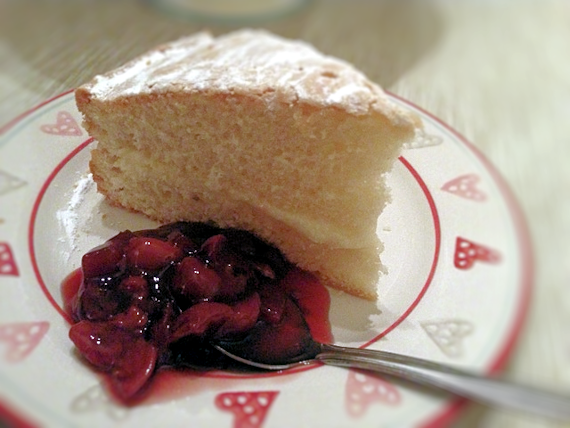
  7. Serve with fruit coulis or sauce.


Posted on 5 Comments

Blogging with a Nexus 7

Argos Nexus 7

I decided to take blogging mobile, and tried a nexus 7 from Argos.

I’ve used a Nexus before as my youngest has one for games and reading, but I’d never tried to blog using one.

Nexus Box

I didn’t have long to wait for my box and I had to be careful as I plan this to be a Christmas present for my eldest.

The box is small, strong and actually quite tricky to get open.  It’s very closely packed so there seems to be no room for movement within the box which is a good thing.   Google tends to make for good computer programmes, so it isn’t really a shock to find that their tablet version has been such a hit with it’s reasonable price tag and fast responsive screen.

The 7″ screen is lovely and shiny and the weight of the Nexus is actually quite reassuring in your hand.  In the box is the Nexus and a charger cable and plug.

photo (11)

When I switched on, I was greeted by several very easy to follow screens that talked through how to set up and create a Google Account.  When it loads up, the apps and possibilities to put widgets with changing and updating information on the home screen is fairy easy to navigate.

Google has made the set up pretty intuitive so there really wasn’t much to worry about at all and most Internet savvy kids would manage to do it without much problem at all.

Make it google

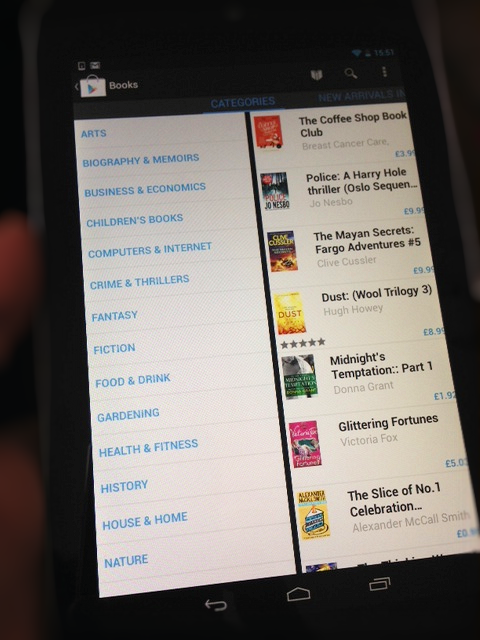
I hadn’t had a chance to look through the book store on Android so it gave me a good opportunity to have a good look around and there seems to be plenty of choice, and also the ability to download a Kindle app which is always a must on any device that I ever use.  I have a fair few books from Amazon that I’d like to keep hold of.

Settings are fairly comprehensive, as are the parental options.  We can set up a different account for each member of the family on one Nexus 7 which impressed me very much.  That means I can have my apps on one account and kids can have a different account with their own apps on the same wee machine.   That’s fairly impressive to me.

Book Store

More new territory for me was downloading the WordPress app.  It’s simplified on Android, but it’s also more than enough to be putting some blog posts on.  The Nexus I have has the front facing camera which is basic, but it’s fine for doing things like Skype.  Kids can use it for taking pics of other things and an app download really helps to make using the camera easier.

I believe the new Nexus 7 has a back facing camera for regular style pictures, but for my kids, I’ve found the one on my version perfectly adequate as they mostly just want to take selfies anyway.

Wordpress

I did a fairly simple blog post for a first one on the Nexus.  A simple silent sunday one where one picture is posted with no words to tell its own tale.  To get a better quality picture, I sent one from my phone to the Nexus by e-mail and simply picked it from the options on the WordPress write new post menus.

For typing, I found the keyboard actually fairly good and easier to master than the Apple one when I first tried that.  The screen is very responsive, very very clear and pleasant on the eye to look at.  It really is easy to see why it took the tablet computing market by storm when it came out and has had such rave reviews.

Blog Post

I’m going to potter with the Nexus for a couple more days and then wipe it clean and set it up again with my eldests information and e-mail.  He is going to be one happy bunny indeed.  I can’t justify the price of iPads for all my kids and these do the job pretty nicely at £159.

My Nexus 7 is a Wi-Fi version which hooks up quite nicely to my O2 phone as a hotspot when out and about and when there isn’t any Wi-Fi available.

With one Christmas present secured, please say it’s really not too early to talk about Christmas, Santa and Elves.

We gratefully received a Nexus 7 from Argos?

Posted on 4 Comments

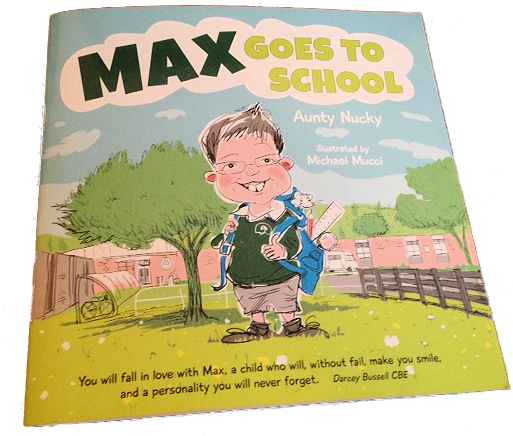
Child’s Book Review: Max Goes To School

A new book has been published that provides a lasting tribute to a fantastically courageous schoolboy who lived in Aberdeen.

Sadly, Max lost his life at the very young age of 11, which is the same age as my middle special needs child.  I didn’t know Max, but I can understand that it would be so difficult to think of something that would provide a future memory, so I applaud Max’s family for finding a special and personal way to share his life in a fun and happy way.

Max had a serious heart infection that led to a aneurysm after being diagnosed with DiGeorge syndrome as a child.

Despite surgery within a few weeks of birth, Max Lechner lived a full and happy life.  He attended Cults Primary School where he was a popular pupil and friend.

The book is called “Max Goes To School.”

Max Goes To School

When it arrived, my youngest child immediately picked it up, read it and chuckled all the way through.  The book was written by Max’s aunt Nicky Bakonyi and the pictures were created by Michael Mucci.

Darcy Bussel CBE, said “You will fall in love with Max, a child who will, without fail, make you smile, and a personality you will never forget.

The book was launched on the 28th August by family and friends of Max and is a very light hearted story of a typical day with Max playing the leading role.

It is a children’s book and is a really good read and is very appropriate for all children as it is really a lovely, funny and heartwarming tale all the way through, from Max chasing his pet mouse Bertie to wolfing down a huge stack of pancakes.   I wonder who Mr Smithereens is, and if he is happy with his cartoon character !!

maxpancakes

The book is funny, it’s clever and it’s a great story that will appeal to all children.

The proceeds from the book will be divided among four good causes.

  • Max Appeal – giving support to those with DiGeorge syndrome.
  • Ronald McDonald Home – accommodation at Yorkhill and other children’s hospitals in the UK and around the world.
  • Yorkhill Children’s Charity – supporting Yorkhill Hospital in Glasgow where Max received specialist tratement.
  • Humpty Dumpty Foundation in Sydney.

With all our support and buying a book that would be a great Christmas stocking filler, the book will support children in the chosen charities.

The book is available at Waterstones and John Lewis in Aberdeen and can be easily sourced in the North East and Glasgow.

To buy online, the book is available from e-bay for £5.99, or find out more information about Max at www.maxgoestoschool.com

It’s really really good and hopefully it is the start of a whole series for our kids to enjoy.

Disclaimer:  We were provided with a copy of Max Goes To School but were under no obligation to write about it.  I’d like to thank the PR for the book as it is actually very lovely and it is well appreciated by us.

Posted on 6 Comments

Sloppy Joes Wrap Recipe with Piedmontese Beef

Sloppy Joes food is actually quite simple and easy to make.   We don’t have to be expert cooks to rustle up something as quick and easy as this.  It’s more known as Sloppy Joe from America and usually involves some kind of ground beef, vegetables and tomato ketchup type sauce bases.

I was lucky enough to try some of the lower fat than chicken beef which is Piedmontese.

I had 500g of mince and a plan to feed all 6 of us with it.  It was exceptionally easy.

Lesley Smith

Sloppy Joes Wraps

Course: Mains

Ingredients
  

  • 500 g Piedmontese Mince
  • Halfl Water
  • 200 g Onions
  • 1 carton Tomato Passata
  • 400 g Mushrooms
  • 200 Baby Sweetcorn
  • LettuceWashed
  • 8 Tortilla Wraps

Method
 

  1. Wash the lettuce, chop the onions and cut sweetcorn into pieces.
  2. Put mince and onions with a little salt to taste on a moderate heat in a thick bottomed pan with no fat added. PIedmontese is very lean, but it can still take the beginning of browning. Use a wooden spoon to separate the mince in the pan as it browns.
  3. Mushrooms can be cooked separately or added to the onions and mince in the pan. I cook them separately in a small pan.
  4. When the mince is browned, add just enough boiled water to give a couple of mm depth and let the water finish cooking the mince. If you need to top up, add just a little at a time. Let it simmer for 10 minutes and add a carton (400g) of tomato passata. Allow the mixture to simmer. If it gets too thick, just add a couple of tablespoons to the pan.
  5. Heat up the tortilla wraps, and serve in bowls for everyone to help themselves from.


Posted on 2 Comments

Microwave Lemon Curd Recipe

Making recipes easy and quick to do always sits well with me.  Toffee is quite hard to make in the microwave, but lemon curd is as easy as saying 1.2.3.   To cook lemon curd (lemon cheese) on a stove, you need to do a pan within a pan of water method as the curd can’t sit directly on the heat unless you want it to curdle.

Buy lemons fresh.  Lemon juice in a bottle won’t cut it for this unless you want a very tart curd.  This made a fair bit and in the microwave you need a good-sized jug or bowl as it does expand a lot while you heat it up.  I’d be tempted to go down to quantities of 3 eggs, 200g caster sugar and 100 or so grams of butter at my next attempt as I ended up with rather a lot.  I started off basing mine on the recipe at BBC Food and their quantities probably are good to follow if you want less than we had.

You will need a couple of small jars to put your curd into.  Make sure they’re washed and dried before using them and your curd will keep for up to 3 or 4 weeks in the fridge.

Lemon Curd Recipe

3 from 2 votes

Ingredients
  

  • 4 Lemons Grate the zest.
  • 4 Eggs
  • 330 ml Lemon Juice From Fresh Lemons
  • 130 g Butter - Unsalted if possible.
  • 275 g Caster Sugar

Method
 

  1. This is easy. Just whip the sugar and eggs together until they are smooth. I used my food mixer for ease. Then it was just a case of stirring in lemon juice, zest and butter.

  2. Cook in the microwave for one minute at a time and take it out to stir at the end of each minute.
  3. When the mix is thickening and leaves a good coating on your spoon after stirring, it's ready. This could take longer than 5 - 10 minutes if you have a lower wattage microwave.
  4. Pour into jars to set, pop into the fridge and enjoy.