Posted on 2 Comments

Halloween is Coming with Party Goodies

Halloween

My boys have just realised how close it is to Halloween and I’ve had to promise them that I’ll go and get their pumpkins tomorrow.

Mine are just at that in-between age when they really don’t know if they should go out guising (trick or treating) or not.   Middler is still going to want to go knocking on doors when he’s about 20, but somehow I’ll have to find a way to get him round a few doors by asking people if they’d mind me still knocking with a fully grown man sized cub.

Halloween excitement has taken over since Marks & Spencer sent us some Halloween goodies for the kids to enjoy.  They spent a lovely afternoon reminiscing about last year, their costumes and what they’re going to wear this year.  We looked out the photograph of last year and they decided to change this year as they were cold in 2012.  My boys all got furry onesies earlier this year and are all thinking of going on with those on to keep warm.

Up here, to be safe, we only allow our children to knock on the doors of homes that have pumpkins outside.  We know those homes are child friendly and indicating they are happy to take part.  There’s nothing worse than going to a door of someone who is clearly not prepared, interested or wanting to have their door knocked on.  We’ve had fruit shoots to tangerines and lots of sweeties in the past with a couple of novel ideas and little toy treats from some who put a lot of thought into what they’d give out to the kids.

M&S

The M&S goodie bag had a fairly large black “Halloweeen Terrifying Table Cover” which fits our kitchen table really well and will be kept ready and waiting for the 31st.

We had the spooky paper chains which were surprisingly easy to make with pull off tabs for adhesive.  It kept two kids amused for half an hour to make it in total and now I just have to think of where I am going to hang it for best effect.

Halloween M&S Chains

The sweeties were popular, as sweeties always are.

Halloween Goodies M&S

We had witches hair, chocolate eye balls and stretchy sweets that kept the kids amused for ages as they are really sticky and difficult to get out of the package.

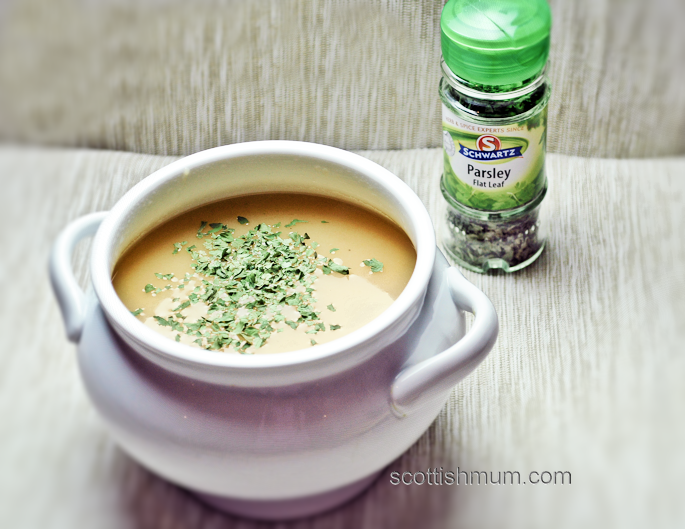
We’re looking forward to Halloween, pumpkin soup, bags of sugar and lots of laughing.  What about you?


Posted on 3 Comments

10 Ways To Add Hidden Vegetables and Fruit To Food

Adding vegetables to kids food is something that seems to present a massive challenge to a lot of parents of both young and slightly older children.  It’s not only my kids I have to persuade to eat more of the good stuff, as the man is known for avoiding much of it where he can.

With a child fussy eater emerging on my hands, it was getting to the point he was eating absolutely zero in the way of fruit or veg.  The only way to deal with it was to add it to foods that he’d not suspect.

It’s no mean feat to get veggies into a child that screws up their face and would rather do without them, but there are some fabulous cheats we can use to hoodwink our kiddies.  It’s normal for kids to go off and on their fruit and vegetables and the secret is not to make a big deal of it and let them come round in their own time.  I’ve found that if I make a huge deal out of it, the offending fruit or veg is looked upon with disdain forever more and mealtimes become a chore.

It really is worth experimenting to find things you can hide fruit and veges in.  It is easier to do fruit as it is naturally sweet and much more palatable but with a little work you could incorporate almost any vegetable that you could think of into something nutritious and healthy.

1. Bake It In

Carrot cake and beetroot brownies are among two types of cake I’ve made to tempt my kids into getting some of their five a day.   I’ve also made fruit into cake, eg peach and pear muffins and I’ve often added far more fruit and veg than recipes ask for.  It always gets chomped down in quick style by kids sure they are getting lots of not so good goodies into their bellies.  Why not try adding in other vegetables and fruits that can be chopped tiny.  There are endless options from banana bread to grated apple cookies, apple pancakes and much more.

2. Drink It Up With Smoothie

Mango, Orange & Pineable Smoothie 4

We make LOTS of smoothies and with good reason.  I keep mine fairly free-flowing where possible as they seem to prefer it like that and more like juice.  It’s amazing what you can make with fresh fruit and even better if you fizz it up with a sodastream to give it that fizzy effect.

 3.  Grate Them Up Small and Add Them To Stews And Casseroles

If you’re making a casserole and children won’t eat things like carrots, finely grate them in and they won’t notice them.

4. Sneak It Into A Burger

For a child who doesn’t want to eat fruit and veg, he’s happy enough to munch down a burger.  I often use mince to make up burger patties and just mix in finely chopped vegetables before forming the burger shape.

5. Hide It In A Pizza

The secret is always in how finely you grate them up.  If they’re the right colour, they can go in.   If I make cheese and tomato pizza, I add whizzed up fresh tomatoes just under the cheese and often just use passata instead of pizza sauce.  They can never tell the difference.  If I’m using dark cheese, I’ll finely grate carrots and pop that just under the cheese.

 6. Pop It In A Soup

Boyo loves chicken noodle soup but there isn’t much goodness in that so I make the stock for the soup with white coloured vegetables, mostly potatoes and a little cauliflower, blend it and then add the noodles.  Hey presto, some veggie goodness thrown in.

7.  Freeze It In

Strawberry-Ice-Cream9-531x3992

How easy is it to make frozen icicles.  Use the easily found icicle makers with popsicle sticks and just add pureed fruit to them.  They are delicious.   Make any flavour ice cream or sorbet you want with fresh vegetables and all the goodness is in the freezer for any time you need it.

8. Pasta With Veg

Macaroni is quite easy.  I add things like very finely chopped onions so that they disappear into the food if they are the same colour as the sauce.  Pasta with tomato sauce I usually make with passata as that can hide a multitude of fresh red coloured vegetables like tomatoes, red peppers, red onions and more.

9. Bash It All Together Like Bubble and Squeak (Rumpledethumps in Scotland)

rumpledethumps 570 x 380

The leftover dish is perfect for adding veges.  I even get away with greens in these.  A little light frying of left over vegetables mixed in with mashed potatoes and shaped into a general burger shape.  I’ve managed to add squash, turnip, seaweed, spinach and more into this fabulous dish.   These tattie, onions and cheese ones were really popular here.

10.  Dessert Veges

Yes, you really can add vegetables into desserts and get away with it.   Chocolate covers a multitude of things as the taste covers up almost everything it is cooked with.  How about a Chocolate and Cinnamon mousse with a  little avocado and sweet potato.  Pumpkin pies can be loaded with beautiful pumpkin and why not try bread and butter pudding with added courgette or cucumber, or ginger, or parsnips.


Posted on 6 Comments

5 Myths of Drinking Alcohol

Alcohol 2Because I post so often about Foetal Alcohol Syndrome, people seem to think I am anti-alcohol all the time which simply isn’t true.

Anyone who wants to knock their livers into insensibility by drinking more than the average hippo could put away in a year only had themselves to blame if they’re not affecting anyone else, however everything in moderation as long as you’re not pregnant and I’m fine.

There are lots of myths about alcohol and although yes, it can lead to horrendously embarassing tweets and pictures on Facebook, it seems to be the drug of choice for many adults in our first world list of things to enjoy.

So – the myths:

1 – Drinking Coffee Will Sober You Up

I don’t know who invented this old chestnut.  I remember having the saying repeatedly drummed into my head as a late teen with a heavy hangover, but it just isn’t true at all. You can’t sober up any faster than it take for alcohol to leave your system.  You may feel more alert with the caffeine infusion, but you’ll still have to wait.

According to the NHS, it take approximately one hour for each unit of alcohol to leave your bloodstream but that can depends on things like weight, age, food eaten, liver function etc etc.

2 – You Sober Up Faster If You Are Sick

A well meaning friend once told me this as I hunched with my head over a toilet bowl in a nightclub.  “Put your fingers down your throat, you’ll feel better,”  Never able to achieve the magic formula that equals self induced vomiting, I carried on hugging the loo bowl while retching and watching the floor spin around faster than than a centrifuge on fast.

Again, you can’t sober up any faster than it takes for alcohol to leave your system.  Is this getting a little boring?  Yes, you might manage to lose a little of the liquid still in your stomach, but generally, it’s really not going to help at all if you try this as a cure all.

3 – Light Coloured Alcohol Keeps You More Sober Than Dark Coloured Alcohol

I have to laugh at this one.   Yes alcohol contents differ on the bottles when we check them, but it doesn’t mean that vodka could be any less hangover inducing than rum.  In this case, the lighter the colour doesn’t mean the less hardened drinker.

4 – Don’t Mix Wine, Spirits and Beer

I had this thrown at me by friends several times that mixing drinks makes you get more drunk, more quickly.  While I’ve not found any research statistics to back this one up, it stands to reason that it’s the alcohol content in each drink that makes the resulting hangover better or worse than you expected.  I’ve never drunk beer as just one sip has the effect of making me gag so I never had the opportunity to test this one out, but mixing wine and spirits is not going to make any difference if the alcohol content is the same.

5 – Lining Your Stomach With Food Will Stop You Getting Drunk So Quickly

Now this one I tended to believe as it was a good excuse to go for a meal before going for a night out.  It’s only recently that I realised it was a complete myth and totally untrue.   Yes, drinking on a full stomach might very well mean that it takes alcohol a little longer to be absorbed into our bloodstream, but it will still be absorbed.   It might be a good idea to have a meal inside you before drinking but it isn’t going to stop you getting drunk.

Posted on 29 Comments

Are your photos being hotlinked from another website?

Hotlinks are where other websites link directly to your image so that it shows up on their website.  It’s bandwidth theft as they use a part of your webspace to show the image on their website and could also have copyright issues.  I’ve written about using images on blogs before so I am not going to go into that again, but you can read it here if you like.

Hotlinks can be malicious.  I found one that said “Here They Are My Frightful Kids.” about an image with my three kids in halloween masks.  It seems to have come from China so I am not keen to upset them and have just deleted the picture from my blog altogether.

Another hotlinked image was one I bought, and was linked to a s_e_x site, but showed up as a catering site.  It refreshed to a s_e_x site when I checked the visit link option, which worried me a fair bit.  I’ve deleted that one too.

I could have chosen to change the image to one that said “this image was stolen,” but I’m not keen to deal with those types of websites.  I may very well have replaced the image with another one if it was to another blogger who didn’t remove it when I asked them to.  If you’re wondering why the _ in the s_e_x word, it’s to stop it being flagged up in Google as a search term 🙂

How to find hotlinks to your website.

Google Image Search is here:  http://images.google.com/imghp?hl=en

The magic term to search on is:  inurl:scottishmum.com -site:scottishmum.com 

Click the magnifying glass to search for images hotlinked to your blog. (Change the site title to yours obviously)  Good luck and I hope none of you find any like mine.

Google Image Search

You may have to click the image to open it so that you can click “Visit Page” to see where it really goes.  ps, you may wish to install McAfee SiteAdvisor in your browser so that it can warn you if it is a risky website that you might end up going to.

Google Image Search 2

Posted on 8 Comments

What does “Favouriting Tweets” mean to you?

Twitter Like - DislikeA few days ago, I saw a tweet that was retweeted and I followed a link to an article about favouriting tweets.

I opened my surprised eyes as it talked about things that seemed more fitting as terms from fiction riding under the radar of legality.

I chuckled as it talked about hate-faves, fist bumps and too hot to handles.  I really can’t repeat any more or I might spit out my coffee.

I honestly didn’t think people used the “favourite” function for anything other than bookmarking tweets.  Perhaps I’m niave and perhaps function is the operative word as if I choke on my coffee any more, I might need my bodily functions mopped up.

It made me giggle a fair bit actually.  Is this making any sense to you?  Honestly, it took me a while to get my grey matter around it.

I found out that wonder of wonders – people are actually favouriting tweets to say thank you, I hate you and much more.

This Twitter Revelation Began Simply:

@QHSEman1 Tweeted this link m.theatlanticwire.com/technology/201…

It seems to me that people could use a favourite to keep note of a Twitter id, to be able to refer to a tweet somewhere down the line and they could even favourite so that they remember to come back later on an anonymous account and rip me to shreds.   I guess that’s a hate-fav.  I’ve had a few of those.  Perhaps a bit of ESP is in my future so I can tell the ones that like me from the ones that don’t.  In all reality, I’d really like to know.

The revelation also led me to imagine what secret messages people are trying to convey to Google or Yahoo, or even Jeeves.  Favouriting a website on your browser could mean you want to have its babies.

Joking aside, it seems it’s actually a very real issue and lots of different people use them for lots of different things.

If favouriting a tweet was with the intention of a favourite back, or a follow, or to show approval or “like” of a tweet, it might not be interpreted as that by other people.

There are several reasons for not using a favourite as anything other than simply bookmarking a tweet for later:

  • Most people will have no idea why you are favouriting their tweets.
  • Other people may use favourites very differently from you.
  • It is most disconcerting to have tweets that are in effect non-tweets be favourited.  I often wonder if I have a new troll if someone favourites a tweet that is simply a statement of gibberish or nonsense.
  • Replies and mentions mean everyone knows what you mean and there is no wondering why.
  • Lots of people have notifications turned off and don’t even use the e-mail address they sign up to social media.
  • Favourites don’t show up in rankings, stats or anything else in my Twitter App of choice, so are pretty much pointless as kudos givers – especially if they may never be seen.
  • There’s nothing wrong with using DM’s.  That’s why there are there.  Say thank you privately if you want to, and the tweeter will know exactly what you mean.  Abusing DM’s is a completely different thing.

I did a quick trawl of the Internet and could only come to the following conclusion in answer to the original article which asked “what are you really saying when you favourite a tweet?”

“I’m either bookmarking it, or I’m in spy mode as only I know why I decided to favourite a tweet that you might or might know whether I liked or not and might or might not even ever find out about.”

Confused?  I am.

Posted on 11 Comments

The Caffeine Effect

Coffee-Beans-2Sweating and with a heavy headache, coming off caffeine was no easy feat.  I hadn’t realised I was so addicted until I tried to stop drinking diet fizzy drinks.  It wasn’t the aspartame that people tend to attribute as the biggest problem, as that was still in the diluting juices I fizzed with my soda stream instead.

I must have been taking caffeine in large doses although I really had no idea just how much it took to end up with withdrawal.  I was obviously sipping enough of it as the withdrawal was very obvious.

I’ve heard people saying that caffeine isn’t addictive, but if you have ever ingested lots of it over  a long time frame and tried to stop, you’ll probably get some of the symptoms I suffered with it.  I believe caffeine is a mild painkiller, so perhaps lots of us self medicate by using it.  Boots tells us that caffeine helps other pain relievers to work better, and is often in over-the-counter pain relievers, cold medications and diet pills.

I know that coffee and tea are the ones we know most about, but where I took most caffeine in was with my Diet Irn Bru and Diet Coke.  My kids were also all imbibing it in larger quantities by wanting Pepsi Max which seems to be Diet Pepsi with added extra caffeine.  Cocoa beans contain some caffeine, and Pro-Plus tablets / Energy Drinks contain quite high levels.

We all know people who take caffeine to keep them awake or to appear brighter, but where should we draw the limit?  On the Diet Coke bottle beside me, I can’t even find how much caffeine is actually in it so keeping tabs on how much we eat/drink isn’t the easiest of tasks.

There is actually less caffeine in Coca-Cola and Coke Zero than in Diet Coke which surprised me.

In 500ml of fluids, there are approximately:

  • Coca-Cola 48mg
  • Coke Zero 48mg
  • Diet Coke  64mg
  • Pepsi 50mg
  • Diet Pepsi 48mg
  • Pepsi Max 92mg
  • Instant Tea 48 – 62mg
  • Instant Coffee 120 – 170mg
  • Diet Irn Bru – (Approximately 50mg.  I couldn’t find the exact amount anywhere)

Caffeine stimulates the central nervous system and although we do end up with a dependence, it isn’t thought that it would affect our physical health.

Symptoms of withdrawal usually go away after a few days, and may include:

  • Headaches
  • Tiredness
  • Irritability
  • Brain fog (difficult concentrating)
  • Anxiety
  • Shakes
  • Increased heart rate

Daily limits for health are not easily found.

I’ve seen it spoken about that levels around 500mg + of caffeine a day may cause some problems.  Although caffeine is a well studied substance, each persons tolerances are different.

I used to drink about 4 litres of diet irn bru a day which would take me to around 200mg of caffeine a day.  That’s not a massive amount in the terms of caffeine intake, yet I did suffer incredible headaches and used to get stressed if I thought I was about to run out of my liquid nectar which seems totally daft to me now.  I didn’t suffer the other symptoms of withdrawal, but the headache was enough for me.  There are times when I drink a Diet Coke that I can have indigestion, so I do think that caffeine has an effect on me.

Is caffeine safe?  

Who knows, but the effects certainly seem to have been well studied.  I think this is one additive to products we really all have to take our own responsibility for.

Posted on 4 Comments

How to Cook Roast Beef

Roast BeefWhen it comes to late Autumn and the cold weather starts to bite, lots of us start to move to comfort food to keep our kids warm on cold days and put some good solid food into their bellies.

Making roast beef and then later adding all the trimmings is something that we can all do easily and make as healthy or as unhealthy as we want it to be.

Even adding something as simple as a Yorkshire Pudding can make it a dish that everyone would love to sit down to.

Getting roast beef cooked properly is actually easier than most people think it is.

Once it’s cooked, it can be used for a full meal, with salad, mashed, roast or boiled potatoes, or even sliced and added to sandwiches for a fabulous packed lunch.

Choose a Good Cut of Beef

I’d personally choose a rib of beef or a fillet to roast, but there are other options.

  • Beef should look mature and have been well hung.
  • There should be some fat to allow for flavour and to keep the roast moist while it’s cooking.  It can be cut off before it is served up.
  • There should be some marbling through the roast to help keep the roast moist.

Cooking Times

I’d recommend going by the times of your cooker as they can change, or be different from cooker to cooker.  As a general rule of thumb, a very hot oven around 220C to start off with for the first 30 minutes in a pre-heated oven.

Lower the temperature of the oven for the rest of the cooking time to about 190 – 200C.

I check my meat by using a thermometer and put it right into the thickest part of the meat.

Options are approximately:

  • Rare –  (130-140F) The middle of the meat is a bright red hue and pinky towards the outside.
  • Medium – (145-150F).   The outside of the meat will be brown  with a pinky centre and the roast will be hot.
  • Well Done –  (160-175F) As we prefer our meat well done here, I am usually looking for my roast to be brown throughout.

These cooking times and heats are a guide for example only.  Guide temperatures can change depending on who is cooking and the roast you have picked.  Make sure you follow manufacturers and suppliers instructions to make sure your meat is safely stored, cooked and eaten.

How to Cook Roast Beef

  • Rest your beef for an hour before cooking it.
  • It should be roasted in a tin big enough to catch any juice drip that might happen.  Completely encase the roast in tin foil and loosely close it.
  • Once the meat is cooked, it again needs to rest.   Use the aluminium foil and make a loose parcel shape over the top and leave the roast to rest for about 15-20 minutes to get the most out of the meat.
  • Pour off any excess juice for making gravy and your roast is ready to carve and serve with your accompaniments.


Posted on 9 Comments

Drinking When Pregnant: Woman refused a glass of wine by barman.

Wine AlcoholDefying my ability to understand human nature, I am in the court of the poor barman who has probably been hauled over the coals for taking a stand and refusing to serve an obviously pregnant woman with a glass of wine.

It also defies my belief that a heavily pregnant woman would want to go drinking when pregnant and have a glass of wine in the first place.  Yes it’s her choice, but for goodness sake, what about the baby in her belly.  Do women really not realise that alcohol passes through to the foetus unfiltered?

I know that one glass of wine gets me tipsy nowadays so I really do have to wonder just how tipsy it would make a bubba growing slowly in a belly.

I live with a child suffering the effects of someone else’s drinking as a pregnant woman and I feel nothing but disgust for anyone who isn’t an alcoholic choosing to drink while they are pregnant.  I can understand alcoholics as they’re driven by cravings and need, with an illness that is as hard to break as any drug or food obsession, but I can’t understand why someone would want to drink alcohol when they can choose not to.

So, the short version is that someone past their due date popped into a bar for a glass of wine and got refused.  And the barman was slated for it.

If someone really had done extensive research on the effects of drinking alcohol while pregnant, I’d find it hard to believe that they’d then choose to have one, but each to their own.   They do have to realise though, that other people have their own code of moral conduct and there are other people who just cannot stomach seeing that happen.

The Telegraph quoted

“The barman came up to me and said he wouldn’t serve me because he couldn’t have serving a pregnant woman alcohol on his conscience.”

The woman states:

“I felt like asking whether he refuses to serve fat people pies, or whether the bar checks how much caffeine a woman has consumed that day before they serve her a cup of coffee.”

Well, the fat person eating pies, or the woman drinking caffeine who isn’t pregnant – aren’t taking risks with anyone else’s life but their own.

The Telegraph also stated:

“The NHS advises that pregnant women should drink no more than 1 to 2 units of alcohol, the equivalent of a small glass of wine, once or twice a week to minimise the risk to their unborn child.”

Ding, ding, ding.   Disappointing for the Telegraph.

The NHS actually states.

The UK Chief Medical Officers’ advice to women is:

‘Women who are pregnant or trying to conceive should avoid alcohol altogether.  However, if they do choose to drink, to minimise the risk to the baby, we recommend they should not drink more than 1-2 units once or twice a week and should not get drunk.’

It also states:

“If women want to avoid all possible alcohol-related risks, they should not drink alcohol during pregnancy because the evidence on this is limited.”

The NHS goes even further to say:

How does alcohol affect my unborn baby?

If you drink alcohol when you’re pregnant, the alcohol crosses the placenta into the bloodstream of the unborn baby and could interfere with how it grows and develops. In the absence of its own blood filtering system, the foetus is unprotected from any alcohol molecules that cross from the mother’s blood.

Alcohol can cause damage to an unborn baby at all stages of pregnancy. Drinking during pregnancy has been associated with:

miscarriage (over 9,000 women are admitted to hospital every year for miscarriages caused by alcohol [NHS Information Centre Hospital Admission data])
low birth weight
heart defects
learning and behavioural disorders

Yes, it’s a womans right to make her own choices, after all, it’s not illegal.

It’s a pity the baby doesn’t have any rights whatsoever until it’s born.

Would the same women who want to glug a glass of wine in pregnancy fill a feeding bottle with wine and have their babies chug down a glass of wine?

You won’t find any foster or adoptive parent who cares for a child affected by the mothers drinking in the womb approving ANY alcohol whatsoever.

Three cheers for that barman.  He is my hero of the year.

Posted on 8 Comments

Are Artificial Food Colourings REALLY Bad?

Food Colouring

Looking at the ingredients labels on bottles tins and cans when my kids were little would have me literally scream inside and look around carefully for the bad mother halo replacement to be plonked on my head if I chose to feed them something with horrific artificial content.

I’d plonk the offending food items back on the shelves and carry on sanctimoniously with my shopping.

Food additives seemed almost impossible to avoid unless we made everything from scratch.

All of my boys suffer from ADHD along with the other things they live with daily.  I’d spent a lot of time and effort researching what is good and what isn’t for them, and still I got it wrong.

Giving the boys a Fruit Shoot would have them bouncing off the walls and heading for the roof.

At one time, Haribos being fed to my boys would see me looking for the nearest bolt hole to sit out the impending devastation that someone else’s mother has wreaked on my home in the aftermath of their feeding my kids things I’d asked them not to.

I really didn’t give a monkeys about sugar.  A sugar rush was NOTHING in comparison to some of the effects of other foods their bodies seemed to send them begging on their hands and knees for.

Additives have to be assessed for safety before they can be used in our food and drink, but that doesn’t necessarily mean that they’re all ok for every person.   Due to EU laws, all food must be labelled clearly in the ingredients section, but here too, I found it difficult to tell the difference when there are several terms that can be used for the same thing.

I quickly learned that there were ingredients to avoid, and others that didn’t matter too much.

The Food Standards Agency has also said that consumption of mixes of some artificial colourings with the preservative called sodium benzoate could also lead to an increase in hyperactivity in some children.

The artificial colours they identified were:

  • sunset yellow FCF (E110)
  • quinoline yellow (E104)
  • carmoisine (E122)
  • allura red (E129)
  • tartrazine (E102)
  • ponceau 4R (E124)

The FSA states

“A European Union-wide mandatory warning must be put on any food and drink (except drinks with more than 1.2% alcohol) that contains any of the six colours. The label must carry the warning ‘may have an adverse effect on activity and attention in children’.”

As a family, we’ve noticed a big difference with sunset yellow and sodium benzoate.  It rules out a lot of orangey / yellow coloured drinks, but the kids are glad now that some of the things they used to be banned from, they can now eat.

  • Eating smarties – or rather not eating them was a major upset when my boys were little, but now they can.
  • I believe Fruit Shoots have made their drinks more child friendly, but as we’ve not used them for years, I have no idea how much better they actually are.
  • Haribos seem to have new labels on their sweets too, but I’ve not checked closely enough to see just how many additives they’ve removed.

I’ve a lot of respect for the companies actually making the effort to provide good substitutes for artificial colorings in food.  I wish more would do the same, and consider doing away with monosodium glutimate too as that gives me a headache.

Research was also undertaken by Southampton University which suggested eating or drinking some artificial food colourings could be linked to a negative effect on childrens’ behaviour.

The FSA has amended their advice to state:

” If a child shows signs of hyperactivity or Attention Deficit Hyperactivity Disorder (ADHD), eliminating the colours considered in the Southampton study from their diet might have some beneficial effects on their behaviour.”

Nobody knows more about the effects of some additives and foods on our individual children, but if you need to find out more about the research, it’s available on the FSA website.

Chronic and acute effects of artificial colourings and preservatives on children’s behaviour